See it work
One pass. Every note, on the record.
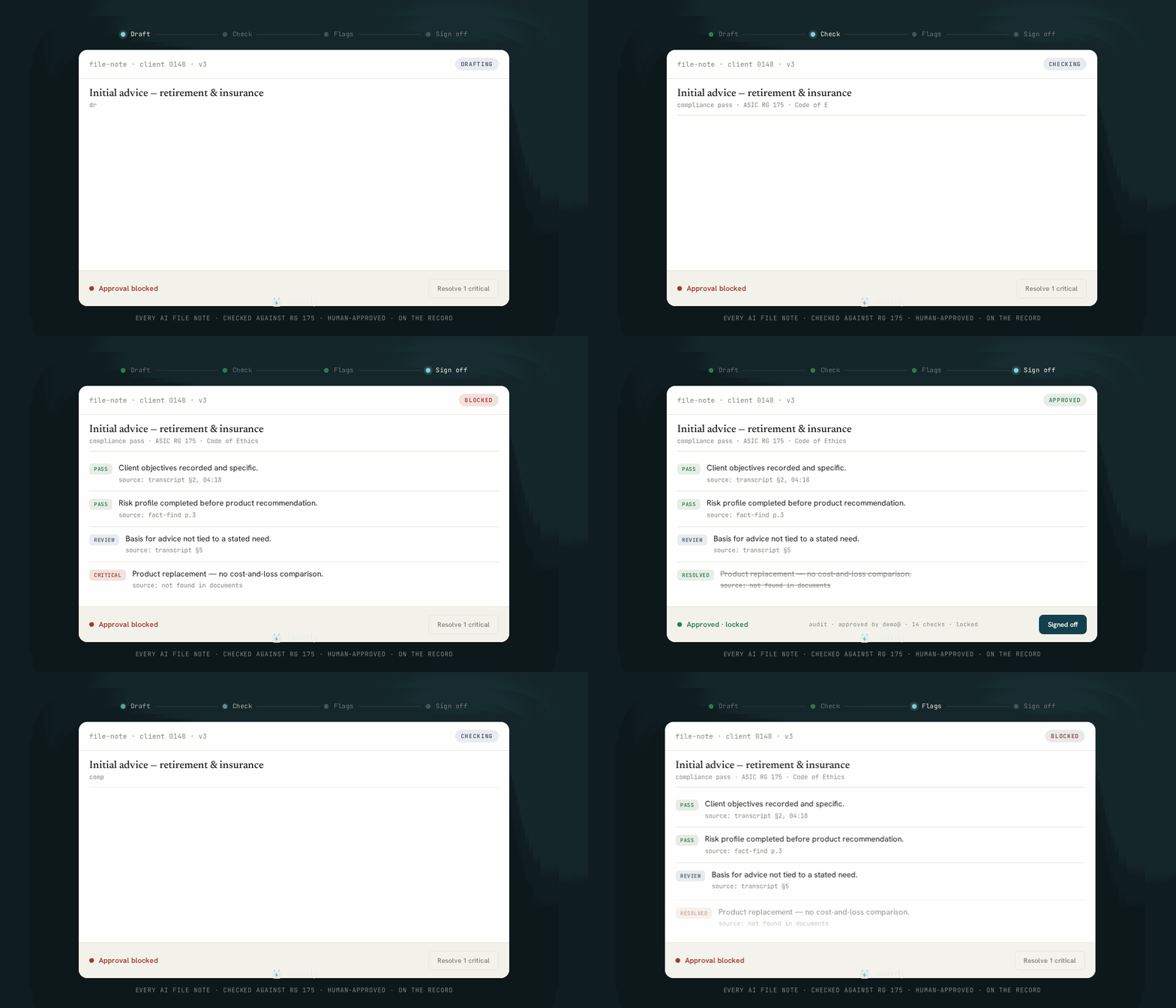
Draft, check against RG 175 and the Code, block sign-off on a critical gap, approve, and log it — the whole review in one place.
rasterly audits AI-drafted file notes against ASIC RG 175 and the Code of Ethics before a human approves. Every claim bound to a source quote. Every action in an append-only log.
Initial advice — retirement & insurance
Draft, check against RG 175 and the Code, block sign-off on a critical gap, approve, and log it — the whole review in one place.
Not another notetaker. rasterly is the governance layer over whatever AI drafts your file notes — so every output is checked, sourced, human-approved, and logged.
A second AI pass scores each note against ASIC RG 175 and the Code of Ethics, raising red flags — missing risk profile, unrecorded product replacement, unclear basis for advice — graded info, warning or critical.
Draft → pending review → approved, one way. An open critical flag makes approval impossible, not just visible. Once approved, the note locks and the API refuses edits. Not a dashboard — a gate.
Every generation, edit, approval and export writes an immutable record: who, when, which model, which prompt version, which source documents. No row can be edited or deleted — enforced in the database.
Each bullet points back to the exact transcript line or document it came from. Anything the model can't source surfaces as a warning, not a silent assertion — so "out of thin air" can't hide.
Register every AI-assisted decision with a significance grade, then generate the Privacy Policy disclosure paragraph tailored to your firm — kept append-only, ready for your compliance officer and legal review.
Approved notes export to Word or PDF with the source citations intact — and the export itself is logged. Only approved notes leave the building; drafts can't be exported.
No new workflow. Bring the transcript you already have; export the file note you already write. rasterly sits in between.
Drop in the meeting transcript and fact-find. Documents live firm-scoped in private storage.
The file note is drafted with every bullet bound to its source line. Unsourced claims are flagged.
A compliance pass grades the note against RG 175 and the Code, raising info / warning / critical flags.
The adviser resolves flags. Criticals must clear before the note can be approved.
Approve locks the note, exports to Word/PDF, and writes the audit entry.
From that date, the Australian Privacy Act amendment requires you to disclose automated decision-making that significantly affects a client. rasterly keeps the ADM register that makes the disclosure defensible — and drafts the policy paragraph for your legal review. The notetakers don't do this. We do.
The same trust layer that governs your advice notes also runs the web tooling your systems reach for — one vendor, one audit model.
For regulated teams: check AI output against the rules, enforce human sign-off, keep an immutable record. Advice firms first — the model extends to any regulated workflow.
When a workflow needs the live web — a page as a PDF for the file, a rendered screenshot, clean text out of a document — rasterly returns it over one API call, SSRF-safe by default.
No. It's a tool for licensed firms. It never produces advice for the end client — it processes the transcript of what your adviser said and checks how it was documented against the code. Every output is human-approved before it counts.
No — it makes them faster and gives them evidence. Reviewers stop hunting for missing risk profiles and unrecorded replacements by hand; rasterly surfaces the gaps with the source, they make the call, and the whole review is logged.
Yes. Checklists and terminology are built for ASIC (Australia) and FMA (New Zealand). You set your jurisdiction per firm and the checks follow.
The Australian Privacy Act amendment requires disclosing automated decision-making that significantly affects individuals in your Privacy Policy. rasterly's ADM register records every AI-assisted decision and drafts the disclosure paragraph for your legal review — so it's a form to fill, not a scramble.
Each firm's data is isolated by row-level security — you only ever see your own. Documents sit in private storage scoped to your firm. The audit log is append-only: no one, including us, edits or deletes it.
No. Upload the transcript you already record and export the file note you already produce. rasterly sits in the middle — it doesn't ask your advisers to learn a new system.
Run rasterly over notes you've already written. See the flags it raises against RG 175 and the Code, keep the audit trail it builds, and get your ADM register started before December. No workflow change, no long contract.
Book a call →For licensed AU/NZ advice firms. We'll reply within one business day.